Hydraulic Ram Pump (Hydram)
| Categories: |
| Hydraulic ram pump |
| Countries: |
| Nepal |
| Language: |
| English |
| Description of what does the solution provide: |
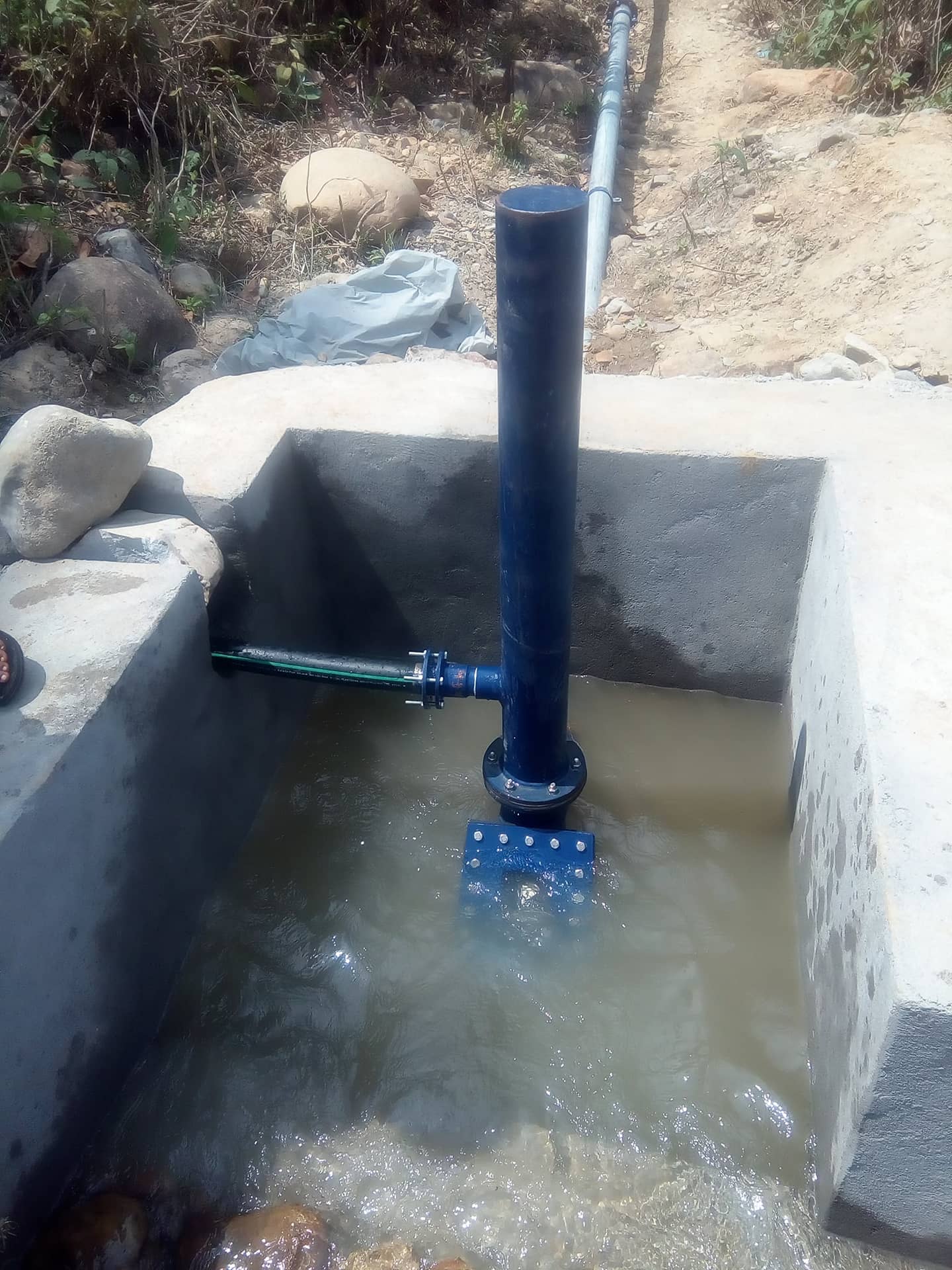
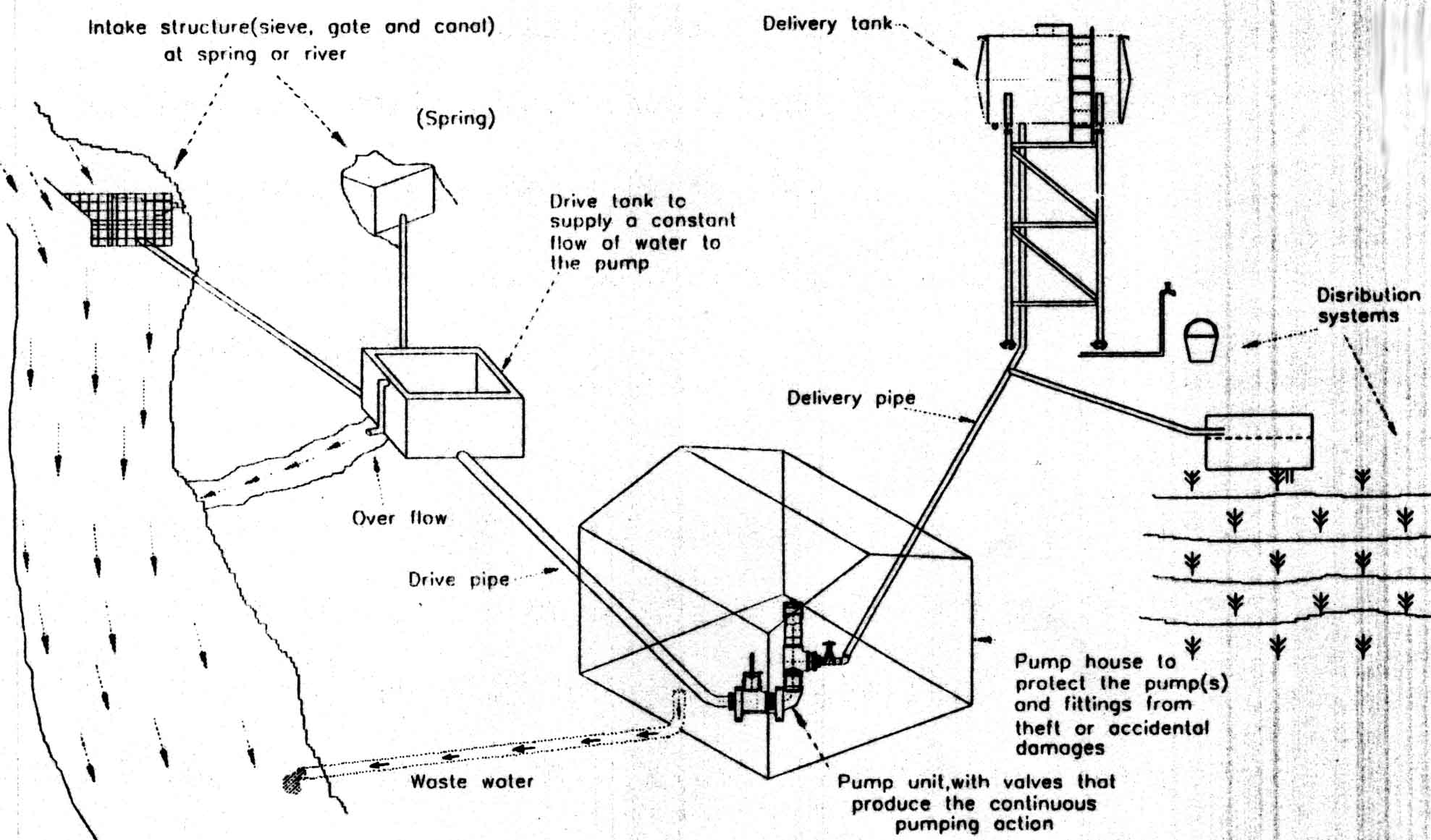
| The pump lifts a small amount of water (approx. 10%) from large and natural free-flowing water sources to the place required in higher altitudes (around 100m high) for irrigation and drinking purpose. High volume input water falling from the height of 5-6 meters provides enough energy to operate the pump and lift water to the required height (100-150 meters). The quantity and altitude to which water is lifted vary with the change in input water height and size of the pump. The pump is available in three sizes: one-inch, two-inch, and four-inch pump diameter. |
| Savings in resource use per day: |
| N/A |
| Cost in money and in own time to construct: |
| The cost of the Hydraulic Ram Pump ranges with the change in its size and site conditions. On average the cost of the pump will be 1500 to 3000 USD. Manufacturing and installing a pump takes on average 25 days. |
| Lifetime, years: |
| With timely maintenance, Hydraulic Ram Pump can last for up to 20 years. |
| Maintenance needed: |
| Since it's a high-pressure operation changing gaskets and check valves are to be done timely and observing the wear. |
| Resources needed in use: |
| It is desirable to have a continuous flow of water falling from the head (5-6 m) and locally trained manpower is sufficient for its operation. |
| Problems and limits in use: |
| Since it is a self-powered machine, a large quantity of input water is required to pump around 10% of water. Also, the principle application of operation of the equipment is a high-pressure operation so low-quality manufacturing can cause unwanted leakages and may require frequent maintenance. |
| Where and how can you get it or make it: |
| In Nepal, Hydram can be accessed through the Centre for Rural Technology, Nepal (CRT/N) and Rural Energy and Technology Service Centre (RETSC). |
| Skills needed to produce, install, maintenance and use: |
| The manufacturing process involves various machining operations making it difficult to produce at a low skill level. Similarly, a lot of parameters like altitude, levels, etc. are to be adjusted while installing making it equally difficult. Normal maintenance and operations can be done at the local level with few hours of training. |
| Climate effect (if any): |
| In sources with abundant water supply, and enough drive head (approx. 5-6 m) there requires no additional energy and resources for its continuous operation. Therefore, the Hydraulic Ram Pump has no negative consequences on climate effects. |
| Where is it used and how many users are there: |
| Used at various hilly locations in Nepal, where there is no access to quality electricity. On average 30 to 40 households per system (pump) are being benefited by its use. So far 30 units of different sizes of Hydrams have been installed in different parts of Nepal. |
| Why is it successful? Success factors: |
| After on-site installation, it is simple to use and maintain. Further, it has no additional operational cost, except for some minor parts that may wear in the due course of time. |
| What are the successful delivery and business model(s), and main actors: |
| Production by local industries and supplying and installing to the community-based water supply and irrigation projects. |
| What are the successful financial model(s): |
| Most of the Hydrams installed in Nepal are donor-supported projects. |
| Organisational contact: |
| Centre for Rural Technology Nepal, CRT/N |
| External links: |
| graminurja.com.np/hydraulic-ram-pump/ |
| Date of post creation: |
| 2021-10-08 |
| Date of last changes: |
| 2022-08-29 |
The database for Eco-Village Development in South Asia was developed by the NGO cooperation project:
“Next generation low carbon, climate resilient Eco-Village Development in South Asia “ in 2021-23.
The database includes local sustainable solutions, media (photos, graphics, videos), publications, and organisations.
Read more at About
“Next generation low carbon, climate resilient Eco-Village Development in South Asia “ in 2021-23.
The database includes local sustainable solutions, media (photos, graphics, videos), publications, and organisations.
Read more at About